
Can using the upstroke increase power output?
No — pulling up on the upstroke does not increase power output. The hip flexors engaged during the upstroke are significantly smaller muscles than the glutes, hamstrings and quadriceps used on the downstroke. There is no evidence-based research to support the idea that actively pulling up adds meaningful power. In practice, riders who focus on the upstroke are often less stable in the saddle and demonstrate poorer overall pedalling technique.
Should I slam my stem?
For most riders, no. A slammed stem — where the stem sits as low as possible on the fork — is a position built for pure performance, not comfort or sustainability. WorldTour professionals adopt long, low positions because their off-bike conditioning and training volume allow them to hold those positions for hours. For sportive riders and aspiring racers, a radical drop will typically compromise comfort, handling and power output over longer efforts. Earn your position progressively and let your flexibility and strength dictate your drop, not the pros you follow on Instagram.
How do I know what handlebar width is right for me?
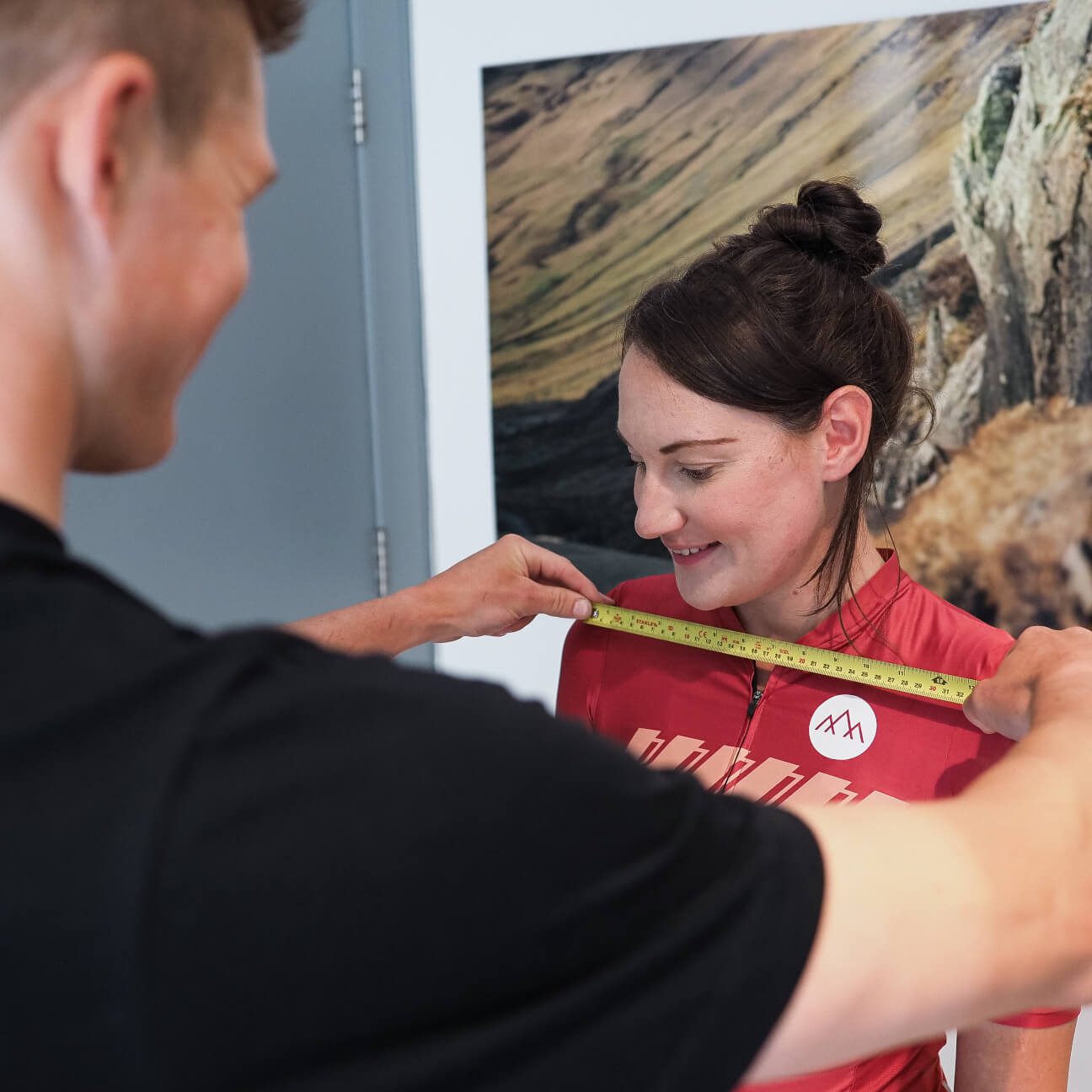
Handlebar width should reflect your shoulder width, measured centre to centre from the acromion process — the bony point at the top of each shoulder. You can do this yourself at home with a tape measure. Most stock bikes come with handlebars one or two sizes too wide. Narrower bars reduce pressure on the hands, neck and shoulders, improve aerodynamics, and for many riders make a significant difference to comfort on longer rides. If you're experiencing upper body discomfort, bar width is one of the first things worth checking.
Do cleats with high amounts of float reduce power output?
No — float does not reduce power output. Float allows your feet and knees to move naturally through the pedal stroke rather than being locked into a fixed plane, which reduces stress on the knee and ankle joints. For most riders, between two and nine degrees of float is the right range. Zero-float cleats have a place for track sprinters and some hill climbers, but for the majority of cyclists more float means fewer overuse injuries, not less power. Speedplay offer the widest adjustment range, with up to 15 degrees available.
Should I use knee over pedal spindle (KOPS) to set my saddle position?
No — KOPS is an outdated method and should not be used to set saddle fore and aft position. Despite being widely cited, there is no sound biomechanical basis for using it as a primary reference point. At Crimson Performance we set saddle position by assessing body mass distribution across the bike, shoulder angle and saddle contact pressure. These give a far more accurate and rider-specific result than a plumb line dropped from the knee.
Do longer cranks produce more power?
No — longer cranks do not produce more power than shorter ones. The crank length debate continues to evolve, but the evidence does not support the idea that longer cranks generate greater output. At Crimson Performance we are strong advocates of shorter cranks, which offer several measurable benefits over longer options: a more open hip angle, improved pelvic stability, a more sustainable low torso position for aerodynamic efficiency, and the ability to maintain a higher cadence. For many riders, switching to shorter cranks is one of the most impactful changes a fit can make.
Should my saddle width reflect my sit bone width?
Yes, but sit bone measurement tools should be treated as a starting point rather than a definitive answer. They provide a useful estimate that narrows your options, but saddle selection involves more than a single measurement. The most important thing is that your saddle is wide enough to support both sit bones evenly. Saddle manufacturers are producing wider options for good reason — wider saddles improve pelvic stability and comfort, particularly on longer rides. Use your build as a guide: larger riders should lean toward wider saddles, smaller and more slender riders toward narrower options. Always buy from a retailer offering a money-back guarantee if the saddle does not work for you. We offer this on every saddle we stock.
Are cycling insoles worth the money?
Yes — every cyclist can benefit from supportive insoles, regardless of ability or budget. All the power you produce goes through your feet before it reaches the pedals, and an unstable foot compromises that transfer at every pedal stroke. The stock insoles that come with most cycling shoes offer virtually no structural support — most can be bent in half with one hand. A set of supportive insoles, whether custom or off-the-shelf, creates a stable platform that improves power transfer, reduces hotspots and relieves stress up through the ankle, knee and hip. At Crimson Performance we use Gebiomized in-shoe pressure mapping to identify exactly where foot stability is lacking before recommending the right solution for each rider.
Can a bike fit fix knee pain?
In most cases, yes. Knee pain is the single most common reason cyclists book a fit at Crimson Performance, and it is almost always addressable through changes to saddle height, saddle position, cleat alignment, crank length or foot support. The key is identifying the root cause rather than treating the symptom — which is why every fit at Crimson begins with an off-bike physical screening to assess range of motion, asymmetries and injury history before any adjustments are made. Most riders who come in with knee pain leave without it.
Should I get a bike fit before or after buying a new bike?
Before — every time. Online sizing charts use height as a proxy for fit, which is an expensive guess on a £2,000 frame. A bike fit before you buy gives you exact sizing data, geometry guidance and component preferences that you can take directly to your retailer or use to configure a bike online. Your new bike arrives already matched to your body, rather than requiring adjustments after the fact — or worse, being the wrong size entirely. We offer a dedicated pre-purchase fit for exactly this reason.
How long does a bike fit take and what should I bring?
The Ultimate Bike Fit at Crimson Performance runs for approximately two and a half hours. Bring your bike, your cycling shoes and the kit you normally ride in. If you do not yet have cycling shoes, bring whatever you have — we hold stock of the most common pedal systems. No bike at all? No problem. Our fully adjustable fitting jig means you can be fitted without one. You will leave with a detailed fit report documenting your position and the changes made during the session.